
DOXA SUB 250T GMT
© Dr. Peter McClean Millar - June 2025

I've got a bit of a confession to make. It's in 3 parts. I like DOXA watches. Well, that's not a surprise I hear you groan. Bit of a giveaway that I've been reviewing them and writing books about them for over 20 years.... and a few other books as well... PETE MILLAR BOOKS...shameless plug!
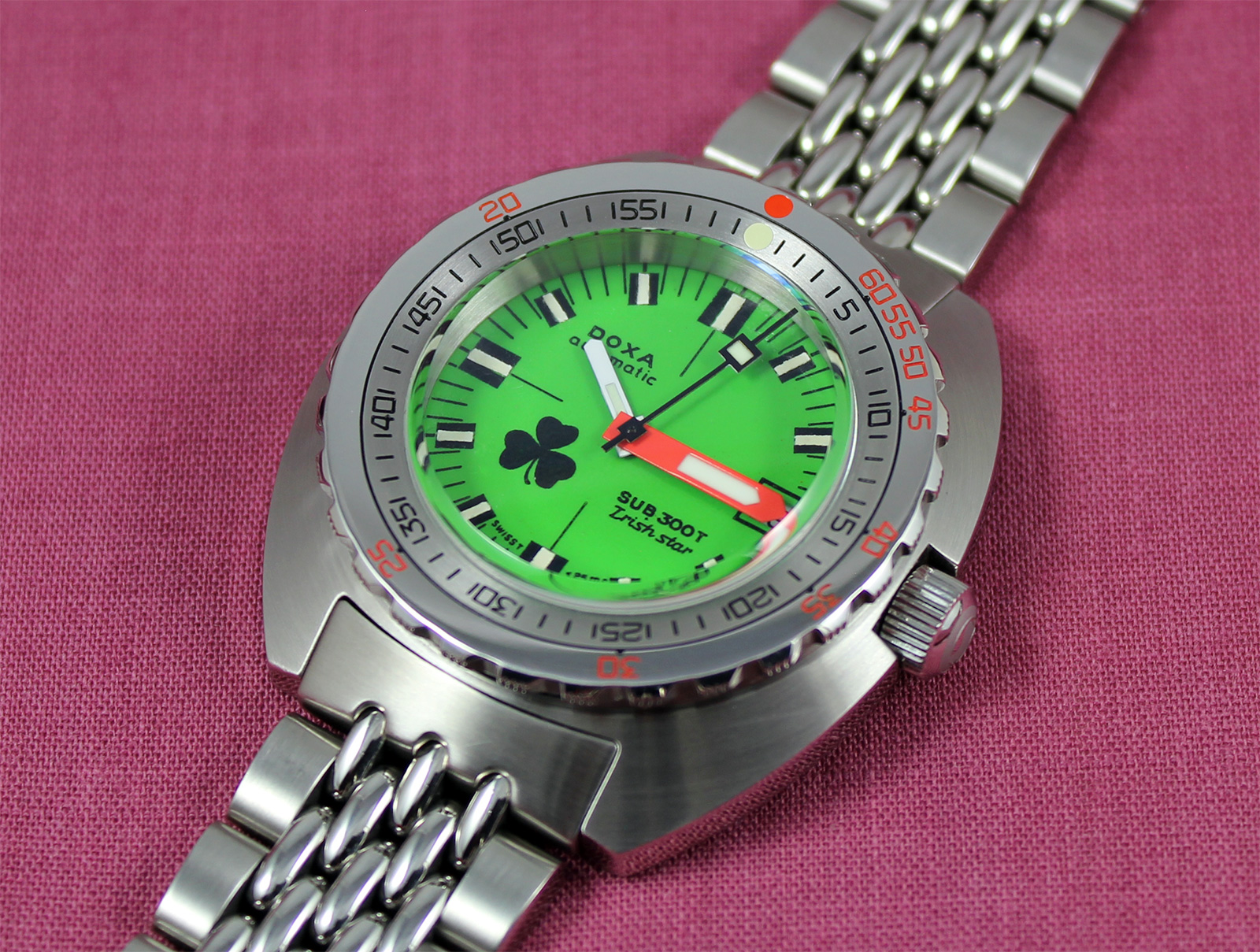
I like green dial DOXAs. Again, no real surprise there as many years ago I made the green Irishstar as a vanity project and in an attempt to get DOXA to make one.
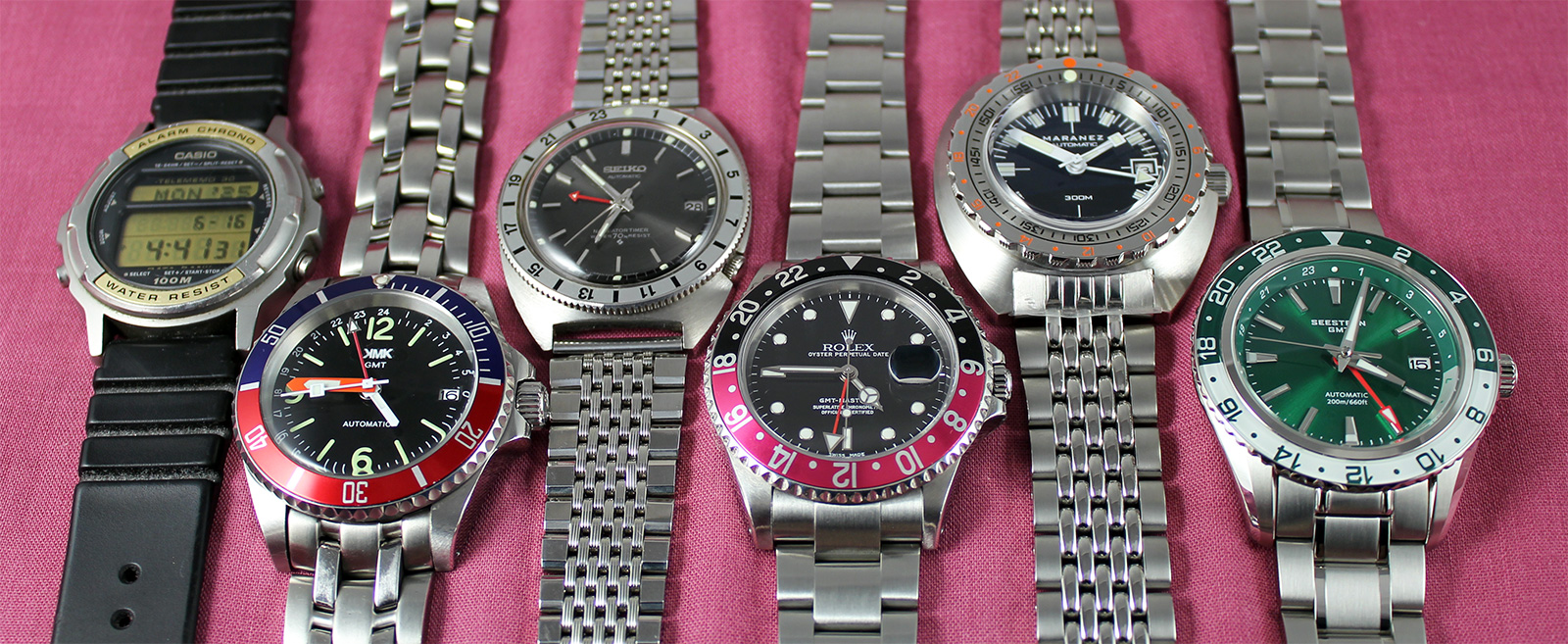
Lastly, I like GMT watches. Maybe, this is a surprise. I've worked in, lived in or visited 38 countries so far. Spent a lot of time in planes, airports and hotels and that is one of the reasons my nickname is "The Flying Doctor." So, as you can imaging GMT watches were part of my life for quite some time. My 2 favorites are the 5 digit Rolex GMT Master II and the vintage Seiko Navigator GMT 6117-8009, but I have a few others and have sold a few others as well. I even have my old Casio DBW-320 which I bought in 1987. It has a dual time function and could store my passport and contact numbers which made it so easy filling out landing cards. Here's what I have at the minute. The Rolex, Seiko and Casio, a Seetern GMT, a Maranez GMT and a "bitsa" I made myself from bits and pieces with a KMK dial I made up. The KMK logo is on the back of my books and represents my children's initials, both K.

I used to own the SUB 750T GMT Caribbean. The review is here SUB 750T GMT. I loved the watch. The color combination was tremendous and even though the SUB 750T, which it was based on, wore remarkably well for a large watch, I ended up selling it. Why? Well, I just couldn't get past the fact that the 24 hour bezel was offset. Instead of a standard 06:00 and 18:00 daytime / nightime split. The 750T GMT used an abnormal 05:30 and 17:30 split. It drove me nuts everytime I looked at it so it had to go.

DOXA fans have been calling for the retun of the GMT for a number of years and at the end of March their wishes came true. DOXA released the SUB 250T GMT in 9 variants. 8 used the "standard" DOXA skeleton GMT hand while one, the Sharkhunter Vintage sports a brownish sunburst dial with faded lume and a more traditional arrow tipped GMT hand with a red point.
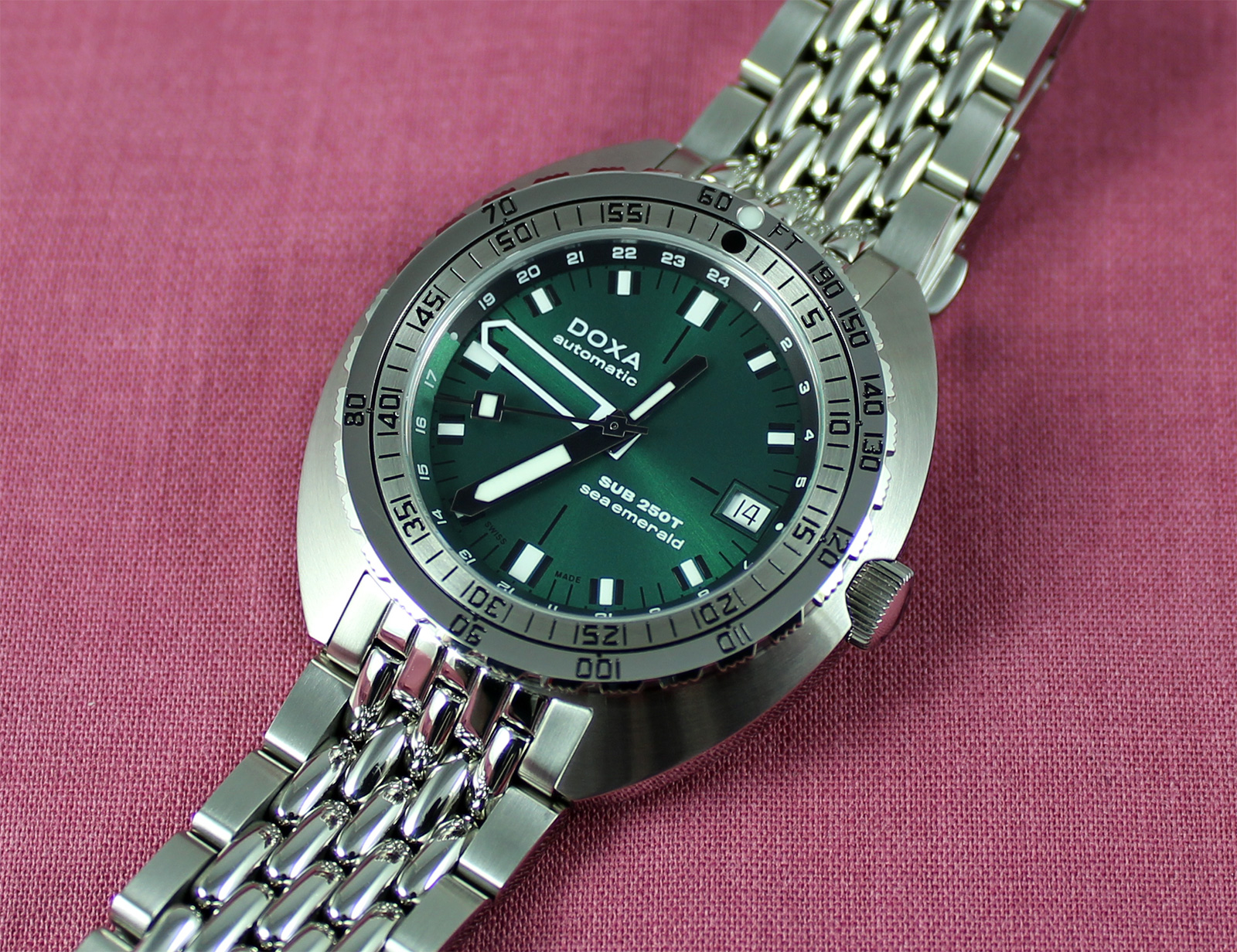
Jacque O'Rourke, the Sr. Director of Retail and Wholesale for the Americas and Caribbean was kind enough to send me one to review. I was going to ask for the Caribbean as I had the previous version, but that green dial thing kicked in and I went for the Sea Emerald. The Sea Emerald dial version of the SUB had been out since March 2024 but I had never seen one up close and personal so it seemed like the right choice.
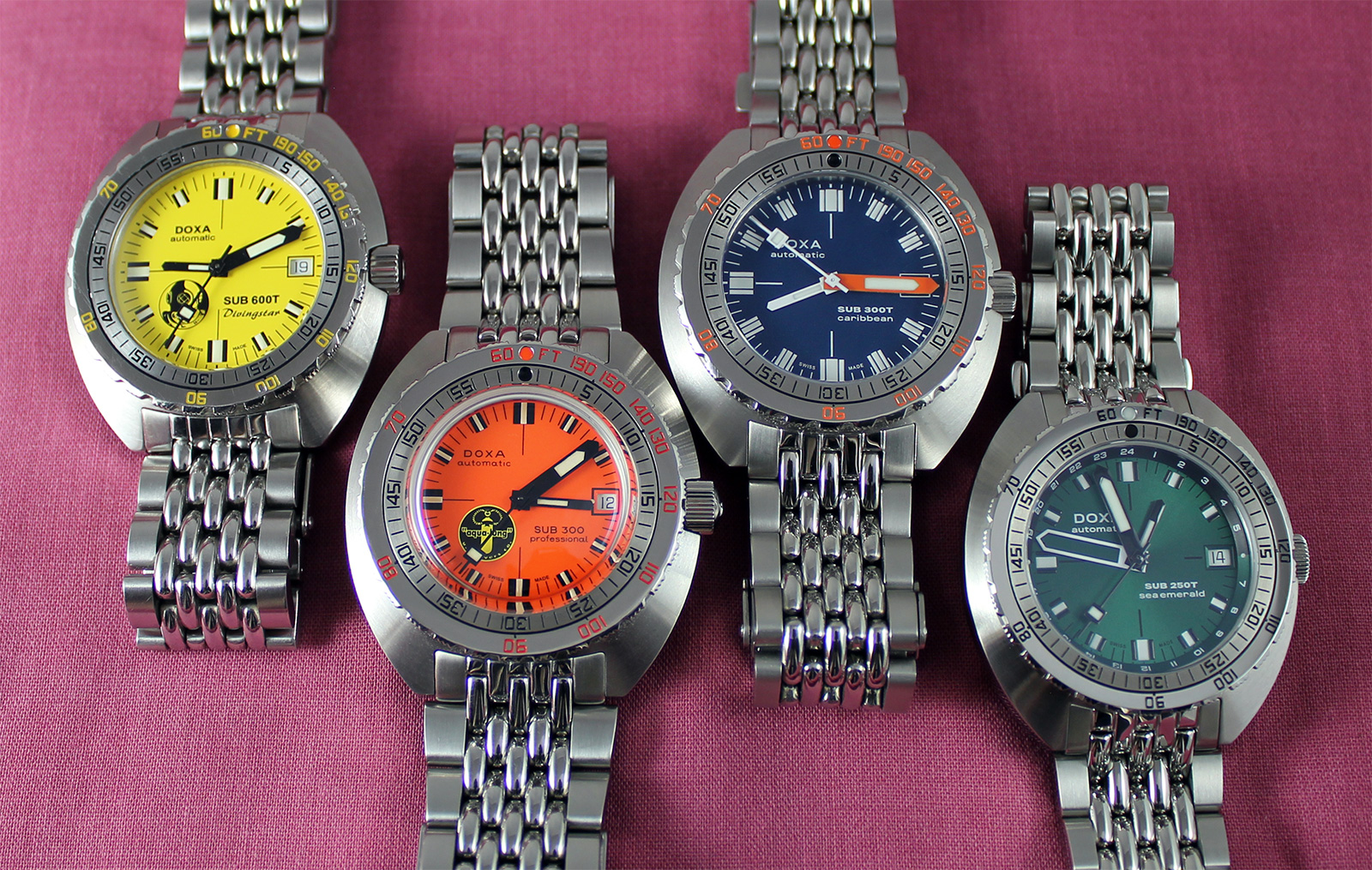
Before delving into the watch, let's do what is known in boxing circles as "the tale of the tape" and see how the 250T GMT stacks up against some other SUBs.
| Lug to Lug mm | Widthth mm | Height mm | Lug Width mm | Weight with Bracelet gms | Weight Watch Head gms | |
| SUB 600T (Marei Era) | 44.5 | 42.2 | 13.2 | 20.0 | 135 | 82 |
| SUB 300 | 45.0 | 42.4 | 13.6 | 20.0 | 135 | 73 |
| SUB 250T GMT | 42.8 | 40 | 11.0 | 18.0 | 132 | 66 |
| SUB 300T | 44.5 | 42.4 | 13.8 | 20.0 | 155 | 90 |
| SUB 750T GMT | 47.0 | 45 | 14.0 | 21.0 | 161 | - |
Couple of things to note about the figures above. The heights of the SUB 600T and SUB 300 include the domed and Top Hat crystals used on those watches. The height to the top of the bezel for the 600T is 12.2mm and for the SUB 300 it is 10.5mm. All the watches were weighed with the bracelets sized for my wife. She is famous for a terrifying sentence... "could you see if that bracelet can be resized to fit me?" .... and Pfffttt, just like that it was gone. Fans of the movie: The Usual Suspects, will know that last bit all too well. And that's pretty much how it went with the new SUB 250T when it came in. She watched me open the box and said 2 things. First one was: "oh that looks elegant" and the next one was: "could you see if that bracelet..........."

The other thing to notice about the numbers is that the SUB 600T, 300 and 250T all weigh pretty much the same with their bracelets. However, if you look at just the heads, it shows just how much lighter the smaller 40mm width 250T GMT is. But and it is a big BUT, I have to ask myself why go to the trouble of shrinking the watch down and then negating the weight loss by using a heavier bracelet than on the SUB 300? Yes the adjustable clasp is nice and allows for easy adjustment but it is thicker and heavier than the perfectly servicable clasp used on the SUB 300.

The clasp still sports the Jenny fish as does the crown and the presentation case the watch is shipped in. But the caseback has now reverted to the classic DOXA sail boat.

Maybe one day the SUBs will revert to the pure SUBs of the Initial Vintage era where they only had DOXA branding on them.
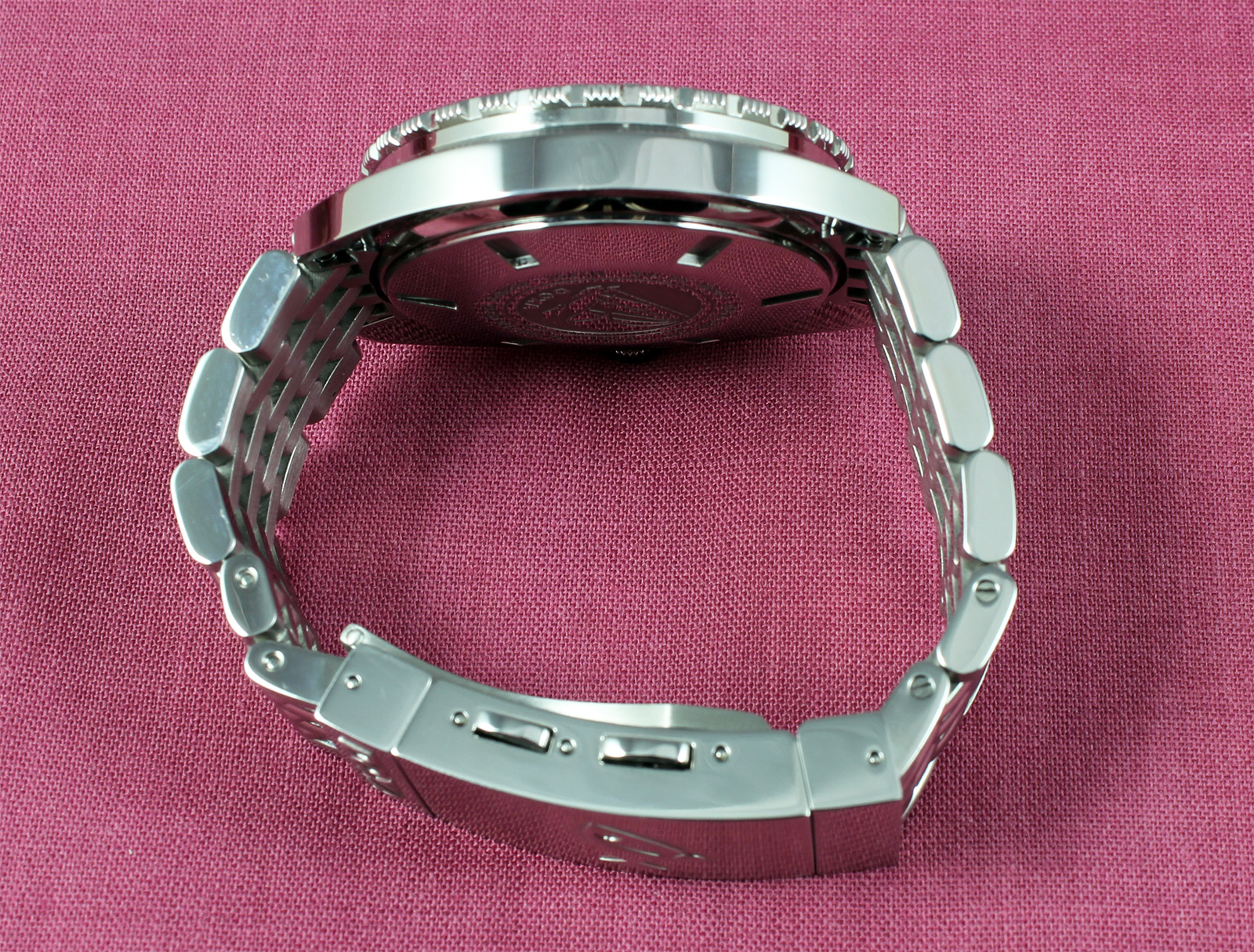
And that brings me to where I really have to give praise to DOXA on what they did with 250T GMT bracelet. They added more removable links. I wish other manufactures would do that too. For most of my wife's watches I have had to buy aftermarket bracelets because the original bracelets could not be resized small enough to fit her wrist. The 250T GMT even had links to spare! If you look at the links on the left side of the clasp in the image above you will notice a half link. The bracelet comes with 2 of these and is a very nice touch. Well done, DOXA! The other thing that people will ask and I checked, is that the 250T bracelet will fit the endpieces of the 300 and 300T. So even though the endpieces of the 250T are only 18mm, the BOR link profile is consistant with the 300 and 300T links.
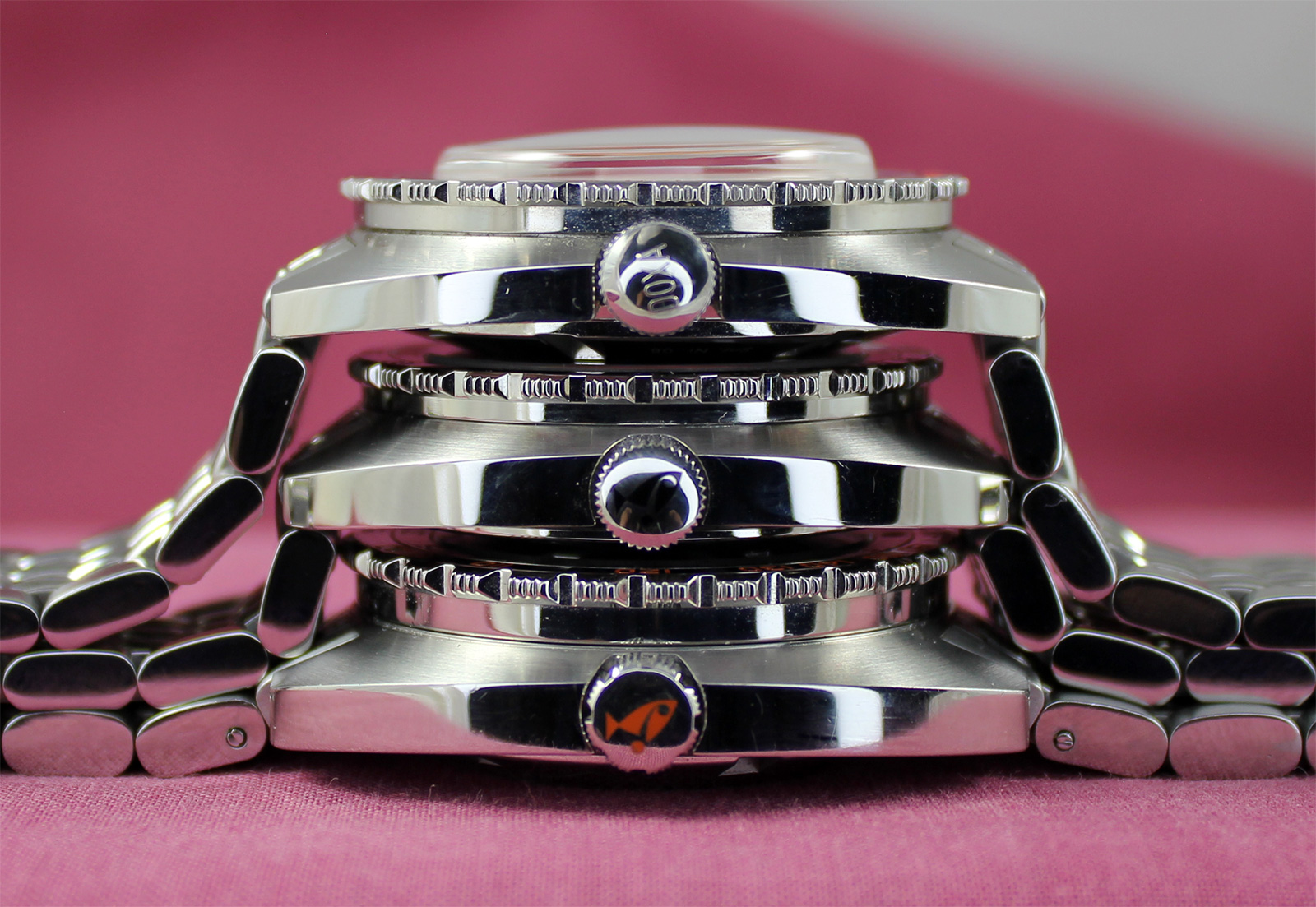
You will have noticed that the height of the 250T GMT is an amazingly svelte 11mm. Part of that is due to the very flat caseback and part of it is due to the movement being used in the watch. The 250T GMT uses a Sellita SW330-2. It is Swiss made, automatic and has a second time zone display via a centrally located GMT hand. It is a direct replacement for the ETA 2892-A2 which are no longer available to anyone outside of the Swatch group. It beats at 28,800 bph (4Hz) and has a power reserve of up to 56 hours and is only 4.6mm tall.

Any GMT will invariably get compared to the venerable Rolex GMT Master II. There are basically 2 types of GMT movement: the "traveler" or "true" which is in the Rolex or the "office" or "caller" which is in the DOXA. Both will allow the watch to track local time and another time zone, but how they are set is totally different. For the traveller GMT, pulling the crown out one stop allows the hour hand to be moved either clockwise or counter clockwise. The GMT hand is moved when the crown is pulled out once more to set the hands. As the hands are moved the GMT hand moves too.

With the office GMT, pulling out the crown one stop allows the GMT hand to be rotated clockwise or the date to be advanced depending on how you rotate the crown. There are a bunch of webpages extolling the virtues of each type of movement and arguments as to which is better. Here's the Pete Millar take.... I like the office GMT movement which is in the DOXA because it is easier to set the date and the GMT hand. With the Rolex which I really only wear on the occasional Sunday, I never set the date because lets say it is out by 15 days. I have to rotate the GMT hand through 24 hours, 15 times to get to the correct date. If I want to set the GMT hand to 6 hours ahead for my kids time zone. I need to pull out crown 2 times to the time set and move the hands to move the GMT hand to 6 hours ahead, then push in the crown to move the hour hand round to my local time. With the DOXA, I pull the crown 2 times to set my local time. Push it in to the 1st stop then rotate the crown one way to set the date and another way to set the GMT hand to 6 hours ahead.

You may have noticed that there has been an abundance of new relatively inexpensive GMT watches appear over the last year or so. Many will be based on the Seiko NH35 which is an office GMT, but many are based on the recently introduced Miyota 9075 which is a traveler GMT. In the image above of my watches, my KMK and Seestern are Seiko movements and the Maranez is Miyota. The image also serves to illustrate different ways in which the 24 hour clock is illustrated. The numbers can be on the dial, on the chapter ring or on the bezel. The Seestern uses both chapter ring and bezel. Maranez who have been making SUB homages for several years were innovative with the NoDeCo bezel design and replaced the NoDeCo numbers with 24 hour numbers.

OK now that is out of the way, let's have a closer look at the SUB 250T GMT. I no longer have the 750T GMT so I can't directly compare it with the 250T. I have included the 750T GMT dimensions in the table above but they don't really tell the complete story, however, the image above from my friend Predrag will give a good idea of the size difference.
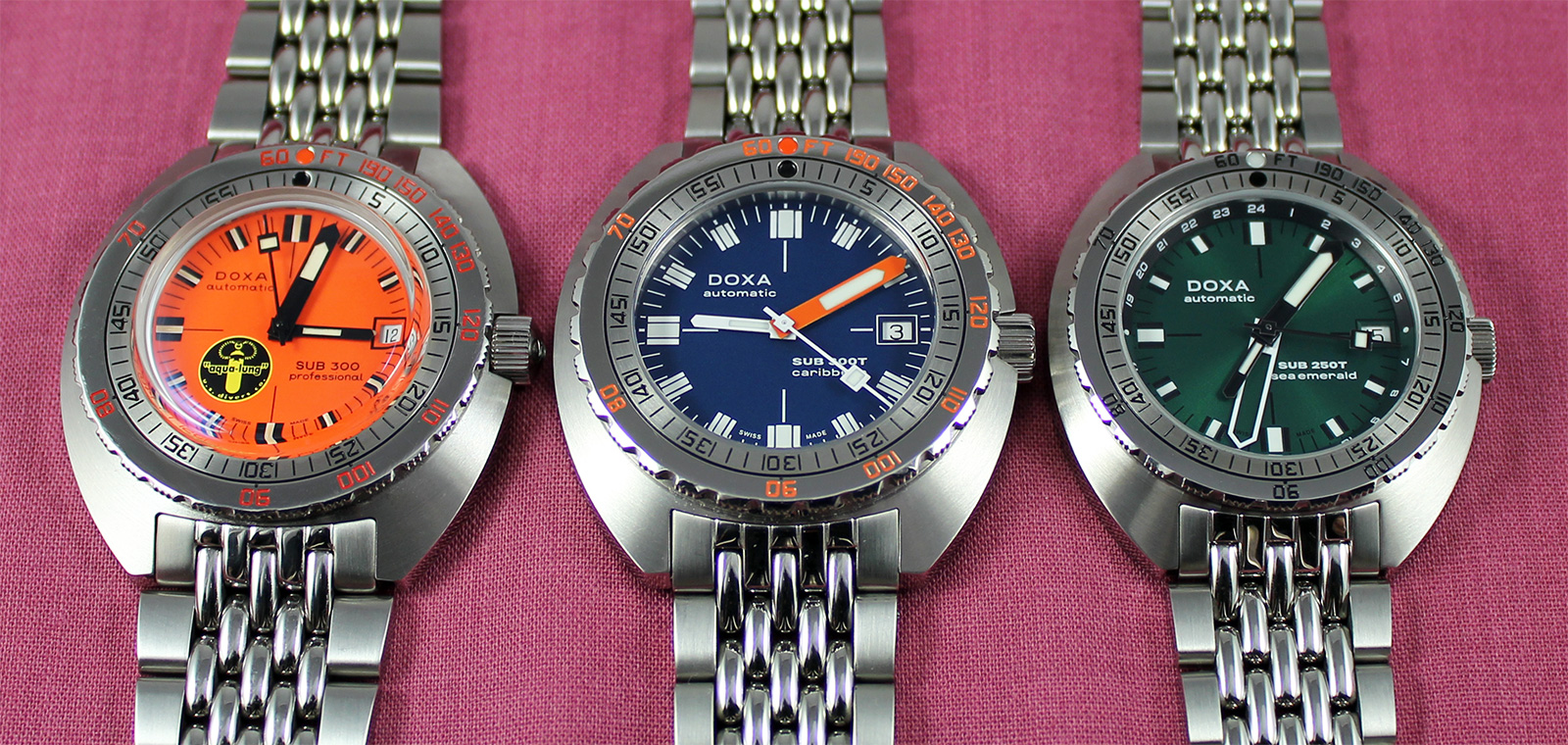
As seen in the table above, the physical dimension of the SUB 250T GMT are smaller than the SUB 300 and 300T but larger than the 39mm SUB 200T. DOXA really have addressed the 3rd market segment with the 250T. The 200T is most likely aimed at women, the "full size" 42mm 300 and 300T are primarilly mens watches and the 40mm 250T is the inbetweeners and trendies who have embraced the smaller fashion watch movement. We saw how the size of watches increased in the early 2000's, reaching veritable hockey puck dimensions, well the trend has reversed now and sub 40mm watches are the new soup de jour. Personally, I think DOXA got it right almost 60 years ago with the SUB 300 and SUB 300T cases. They are perfectly sized and to quote that wonderful expression: "if it ain't broke, don't fix it!"
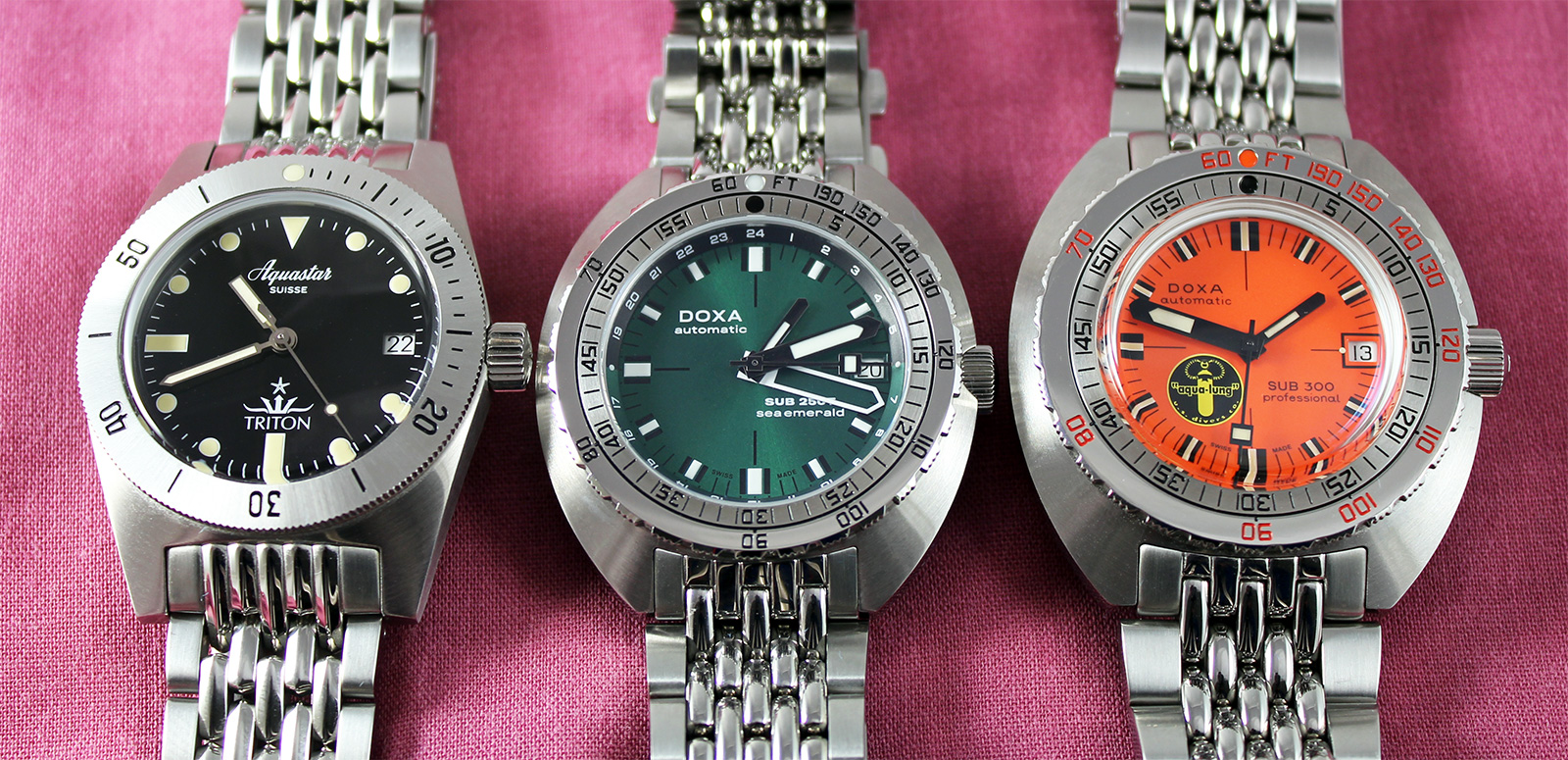
And that is the thing about just looking purely at the dimensions of a watch and ignoring what it actually looks and feels like in real life. Numbers can be so decieving. Take a look at the image above. It shows an Aquastar 60, a modern interpretation of another vintage watch from just before the Initial Vintage DOXA era, the 250T GMT and the SUB 300. The Aquastar is 38mm, the 250T is 40mm and the 300 is 42mm. The viewable dial areas are totally different to what you would expect given the watch sizes. The Aquastar is 27.7mm, the 250T is 27.2mm and the 300 is 27mm. So what sorcery is DOXA using to enable a 40mm 250T to have a bigger dial than a 42mm 300? Well, there always has to be a compromise and with the 250T it is the bezel width. Look closely at the bezels in the image above. The 250T bezel width is smaller than the 300. This means that the numbers are also smaller and in the case of the Sea Emerald, Sharkhunter Vintage and Whitepearl, both the minutes and NoDeCo numbers are black.

Another area where the 250T is larger than the 300 is in the hand and dial lume and that brings us to the obligatory lume shots. The following images show all 4 watches after being exposed to sunlight for 10 minutes and the lume profile over almost 2 hours.
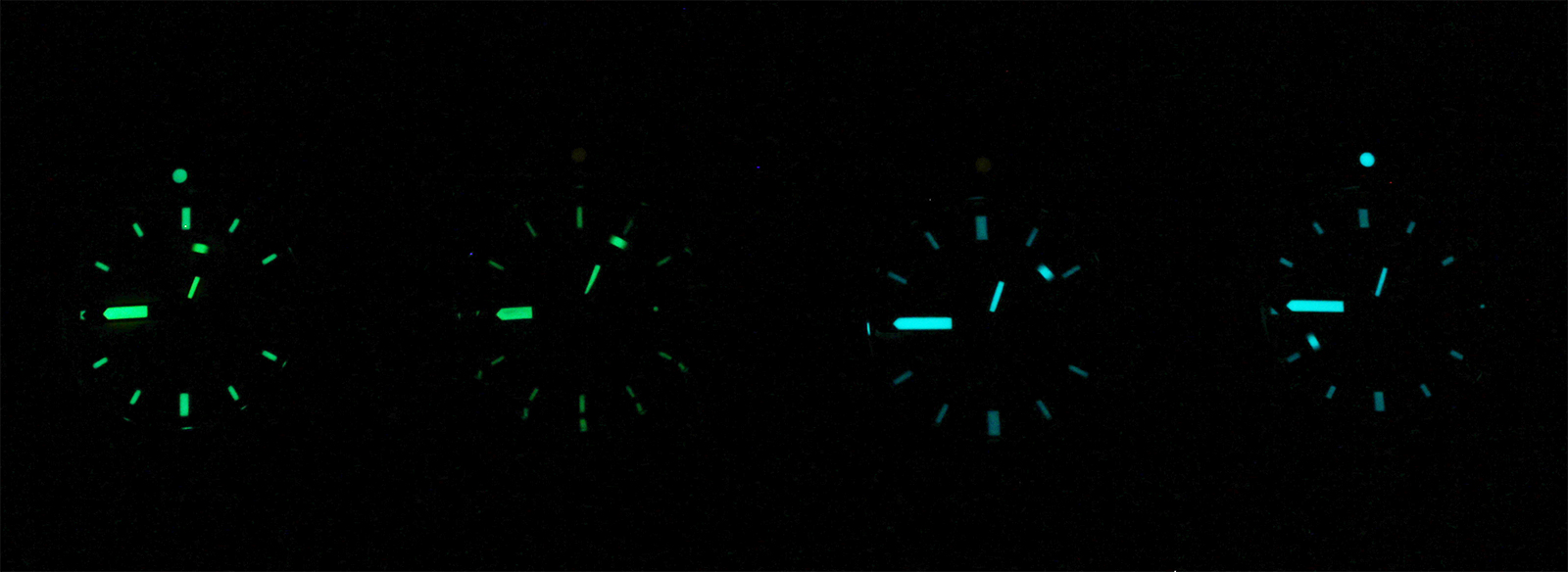

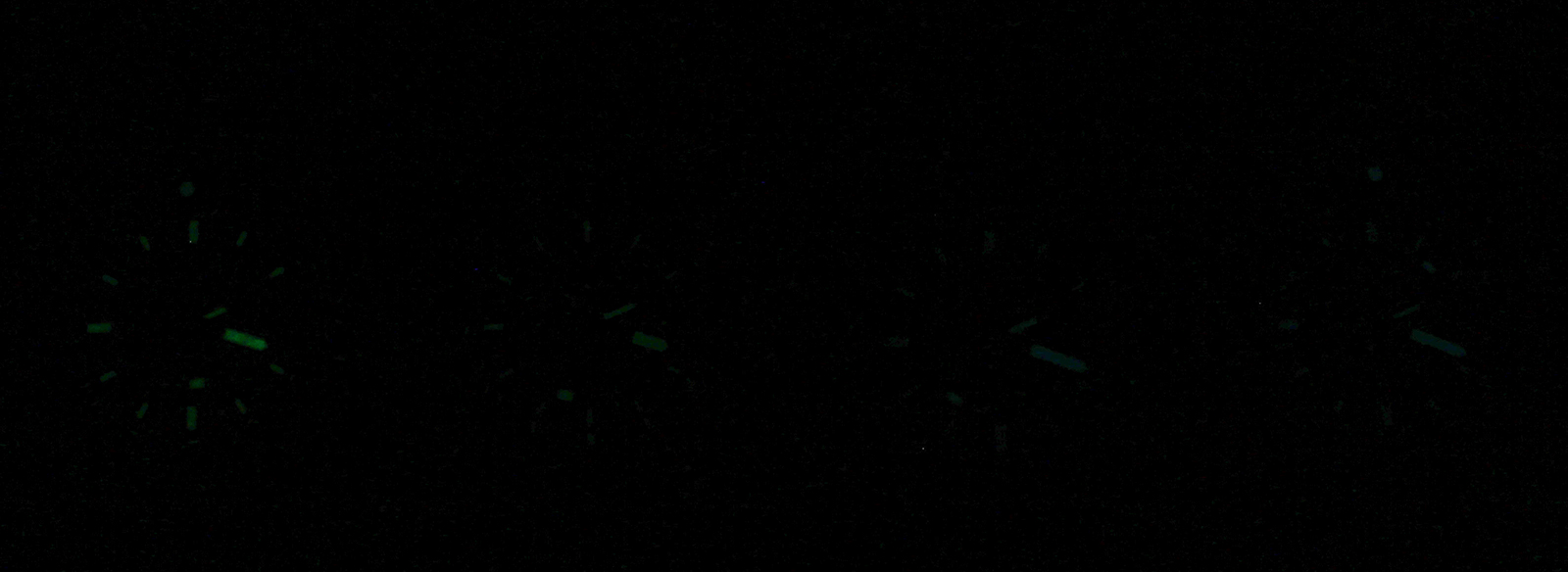
What is interesting is that the 20 year old SUB 600T performs better than the 300, 250T and 300T.

So what is the 250T GMT like to wear? The fact it is 11mm tall and has a relatively flat caseback should be a bit of a give away! It wears remarkably well. A definite wrist hugger.

Here it is on my 6.75 inch wrist.

And here it is on my wife's much smaller wrist.

Those wrist shots are a good segway into the look of the dial and hands. First the dial. I've been going back and forth since I've had the watch as to whether I'd keep the Sea Emerald dial as it is or change it. When I opened the watch I was quite surprised to find that it wasn't really as glossy and bright as depicted in the images in the publictity shots and on the DOXA website. I expected it to look more like it does in the image at the top of the page and like the dial on my Seestern GMT, lighter and with more of a sunburst effect. However, as I have worn it and looked at it over the last week, I'm beginning to like the less blingy and muted color. Now, I really have to see how the Caribbean version looks like in real life.
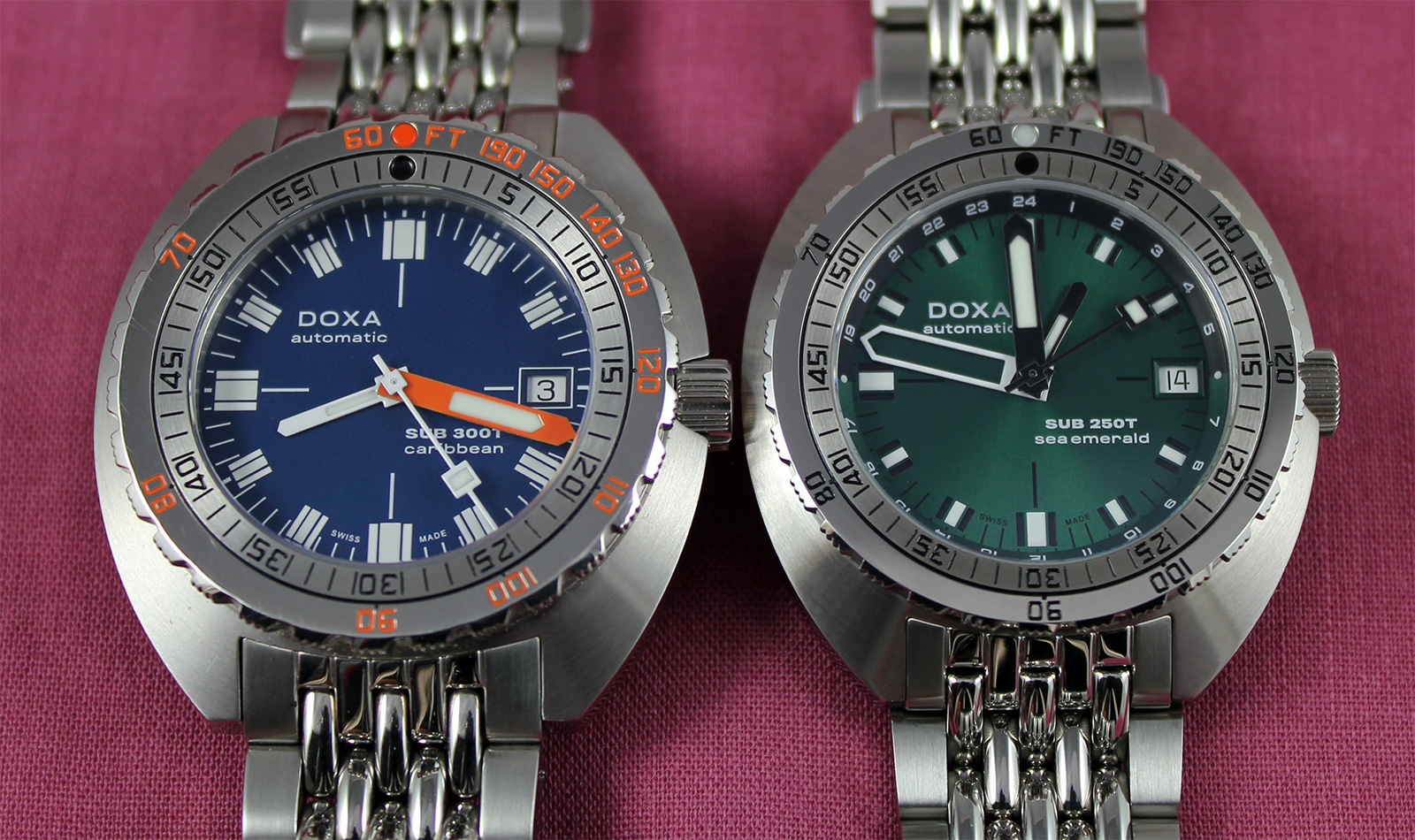
The one thing that I am definitely decided on is the hands. I like the skeleton GMT hand. It sets the DOXA GMT apart from every other GMT, but for the Sea Emerald I would have liked to see the GMT hand in black and the other hands in white. There is less contrast between the green dial and black hands and the white GMT hand is the first thing I see. That really isn't how it should be as far as I'm concerned. The GMT is a secondary function. I normally want to tell the time first and check the GMT time second. The black hands are a good look and other people may disagree with me, but I do think a reversal of the colors would have been better.
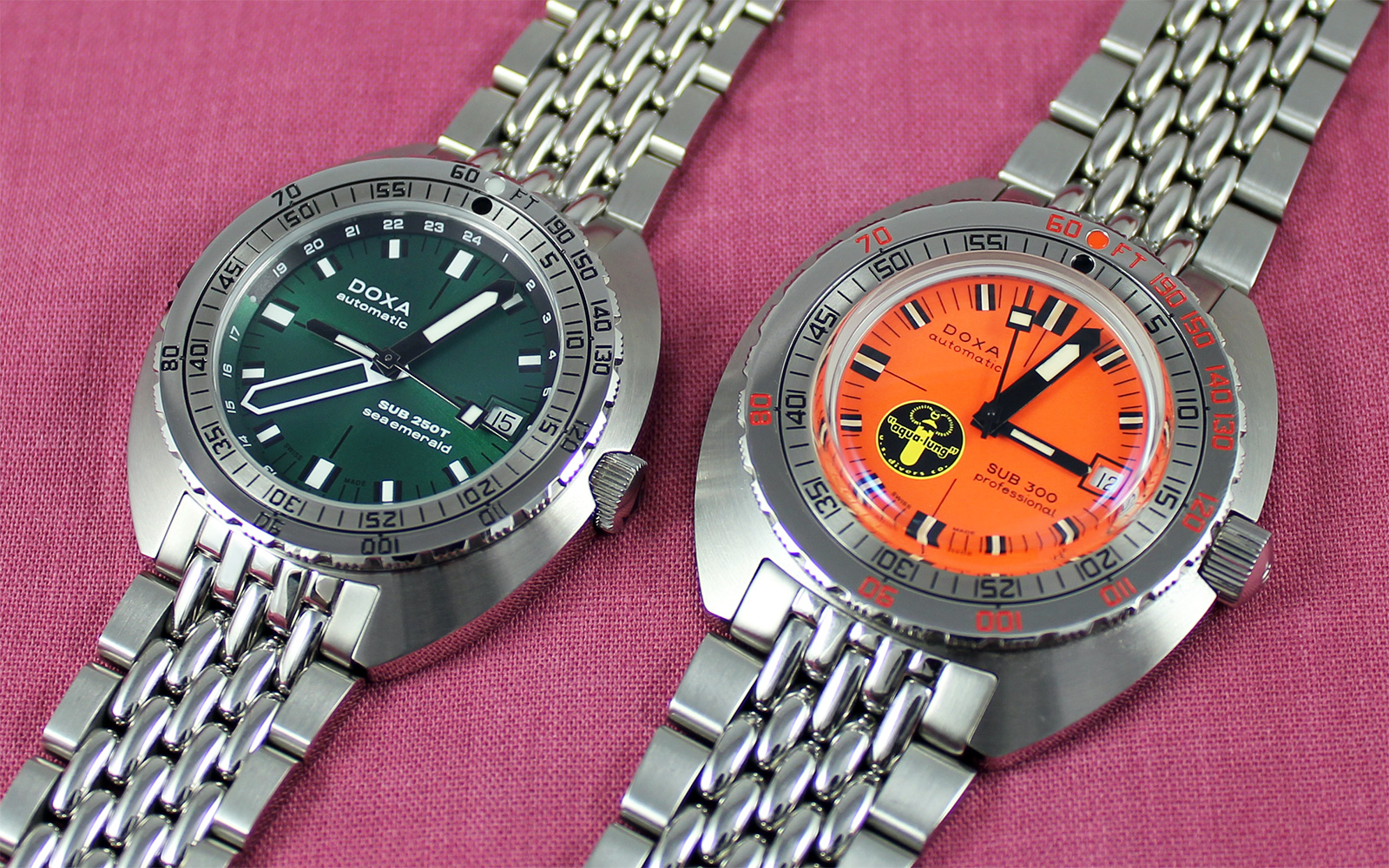
In darker lighting the black hands tend to disappear and it is really the lume color that my eyes pick up after the white of the GMT hand. I did try to do a photoshop reversal but it didn't turn out too well so I haven't included it here. I'm sure DOXA tested a few different hand color configurations and settled on what we see here, and maybe it was the best setup. Anyway, it's just a minor point and purely my (and my wife's) feelings regarding the hand colors.
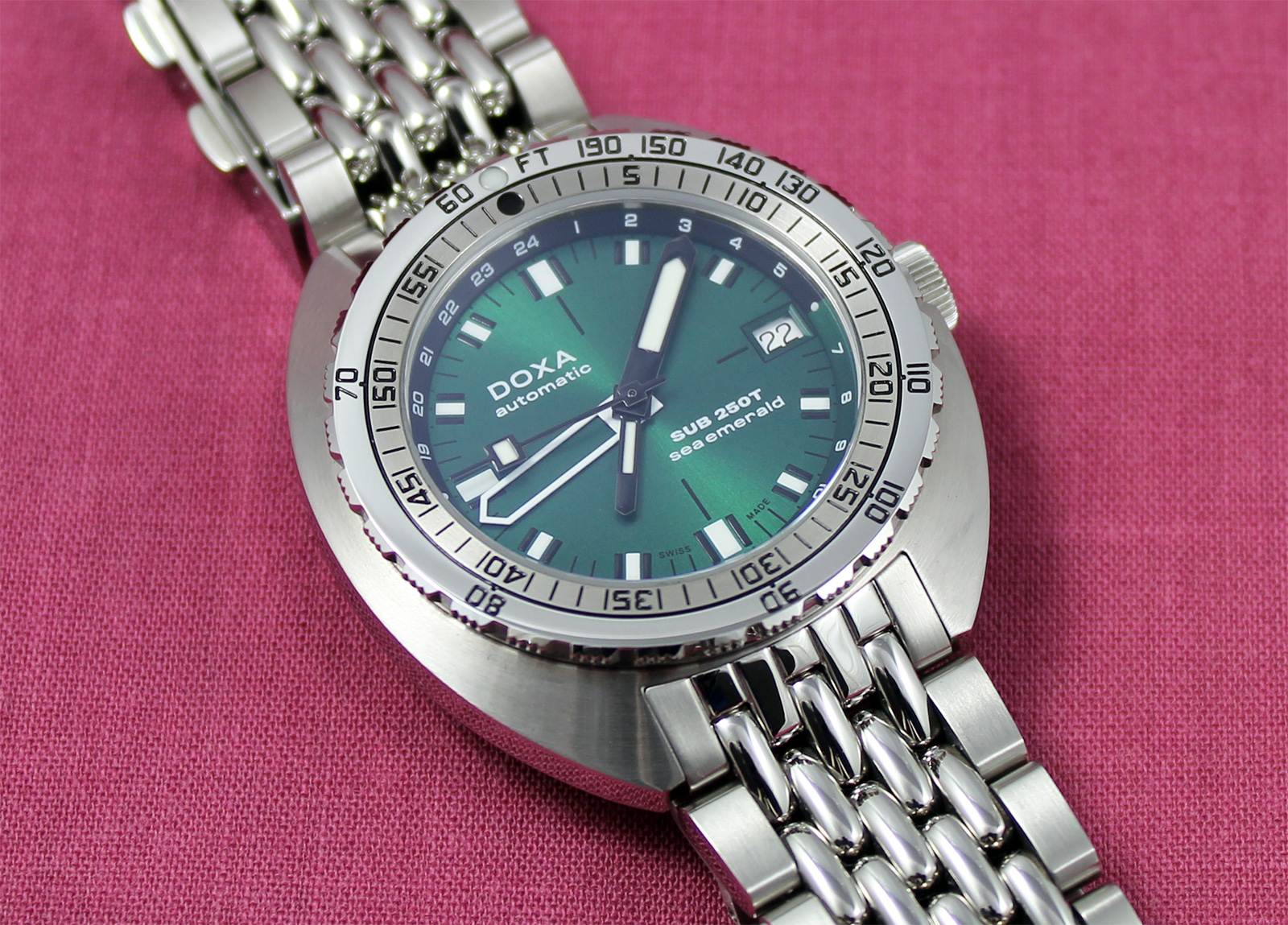
At the end of the day, I think DOXA did a tremendous job with the new SUB 250T GMT and the Caribbean version fixes all the things I didn't like about the SUB 750T GMT. Priced at USD 2,490 on the bracelet or USD 2,450 with a strap, it is a new interpretation of the SUB 750T GMT and because of its size should appeal to more people than the earlier version. The skeleton GMT hand is unique and is as destinctively DOXA as much as the NoDeCo bezel is. Also the 9 color variants will mean there is a version to suit just about everyone.
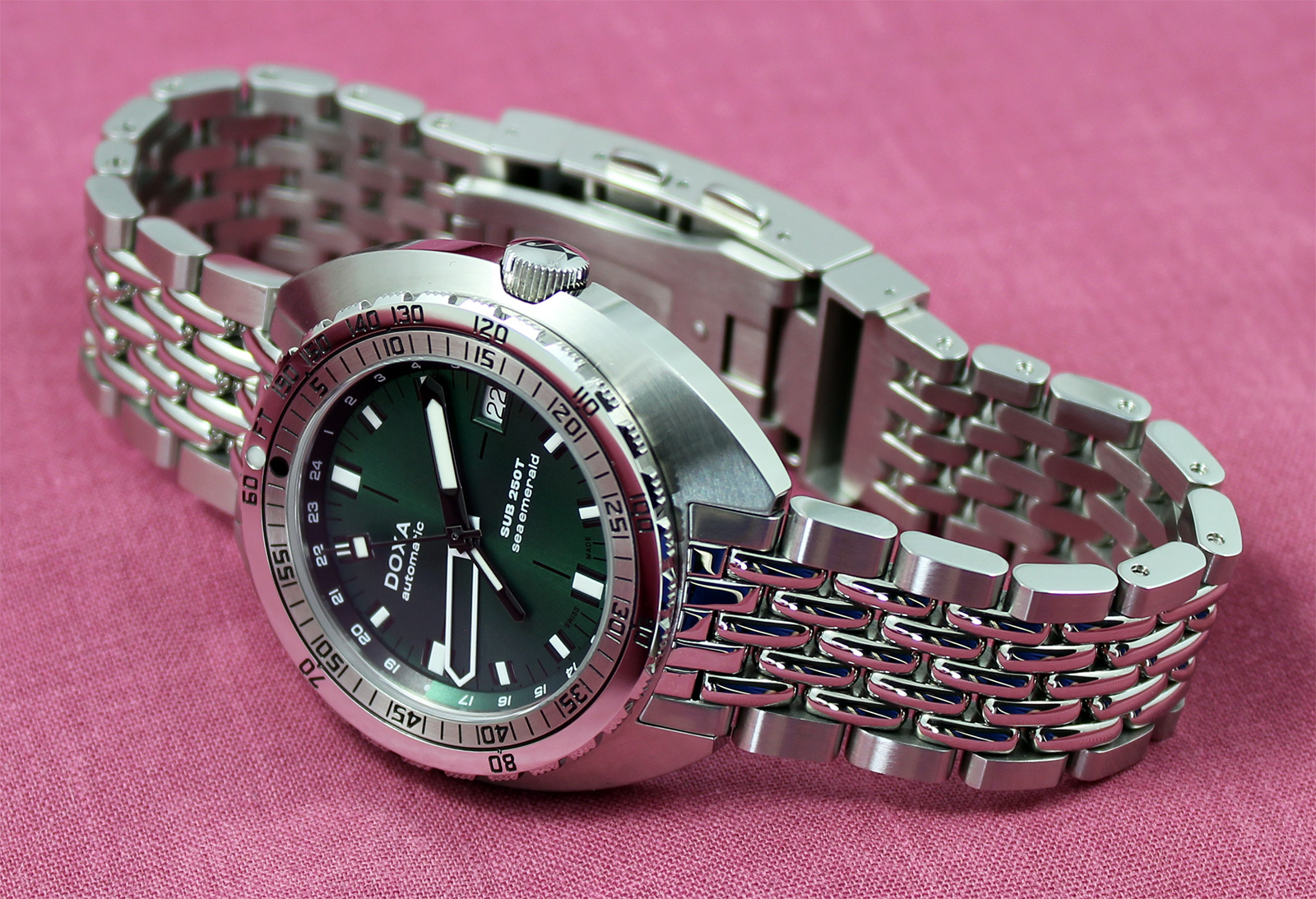
I'll leave the last word to my wife.... I got to wear the watch for 3 days then it was.... can you resize.... and she wore it for the rest of the time. When I lifted it to pack it up and send back, she looked at me and said.... "can you not hang on to it for a bit longer?" Now if that doesn't say she liked, nothing does!